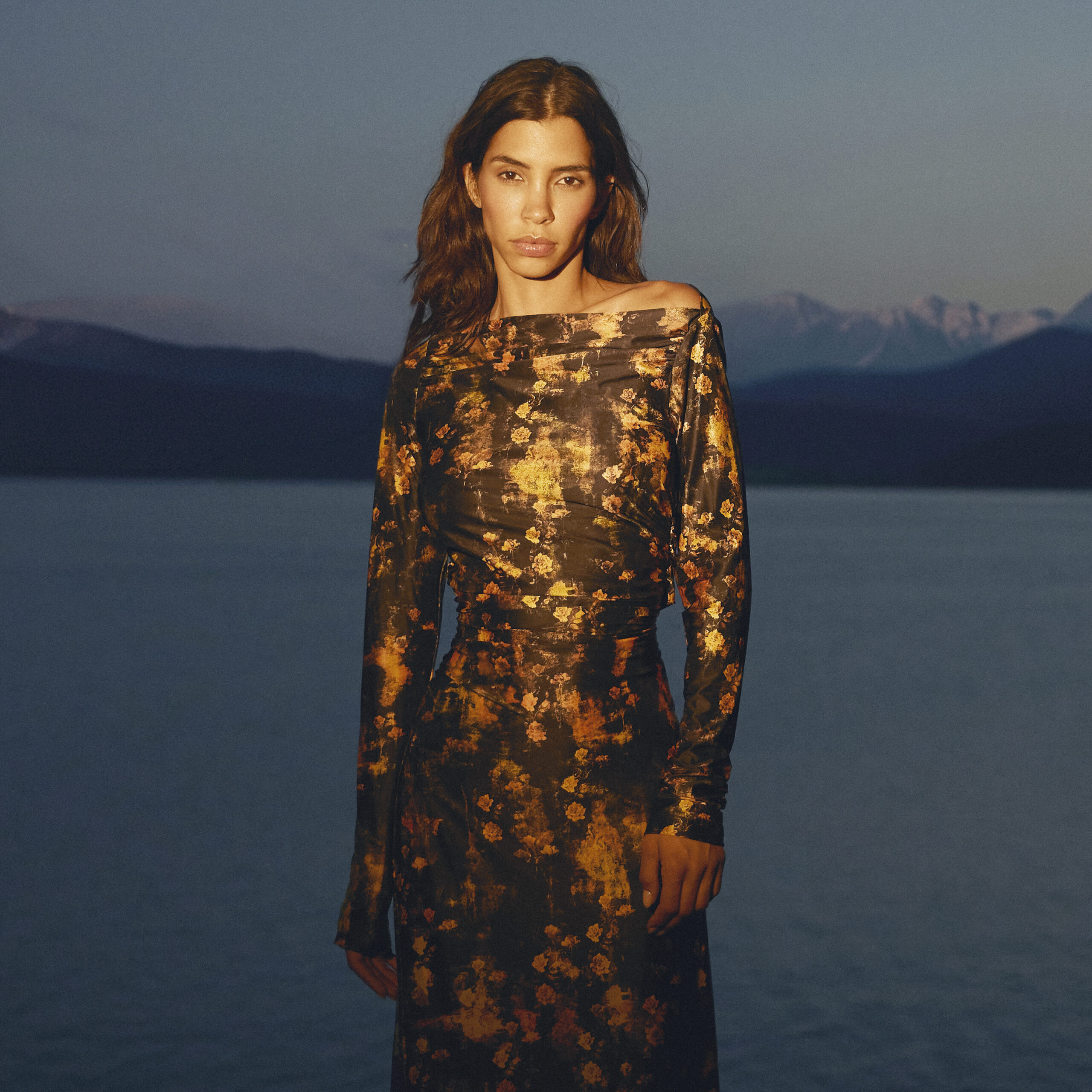

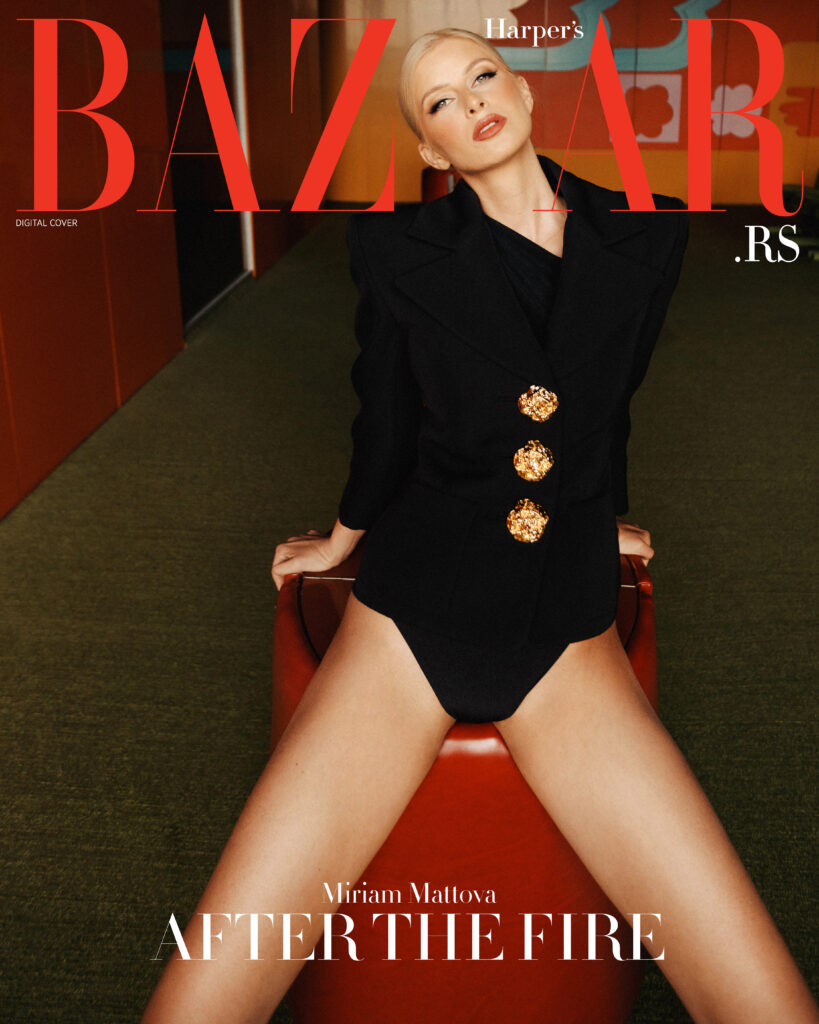
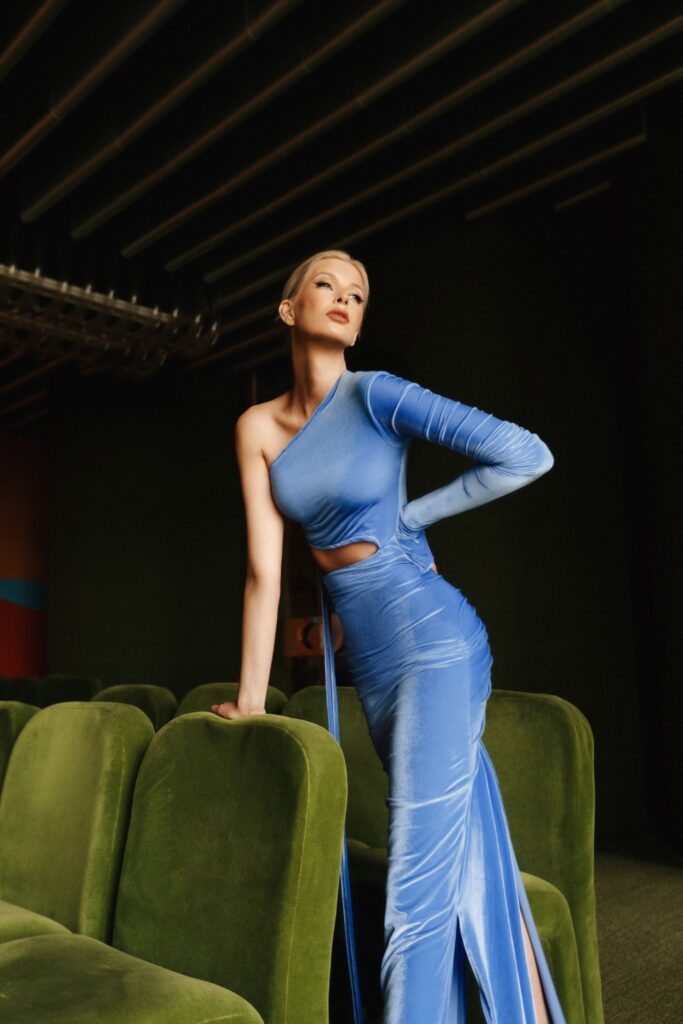
Bodysuit : Ronny Kobo
Miriam Mattova je žena čija priča spaja ličnu hrabrost, porodično nasleđe i strast prema humanitarnom radu sa svetom mode. Njeno iskustvo transformisalo je njenu vidljivost u alat za zagovaranje i promenu.
U ovom intervjuu, Miriam govori o tome kako moda može postati moćan glas istine i ljudskosti.
Koliko je važno da svako od nas ima integritet i da sledi sopstvenu istinu? Šta bi bio Vaš vodič ka tome?
Integritet za mene nije teorijski pojam. On se živi. U modi, u vidljivosti i u savremenom životu, integritet je ono što ostaje kada nestanu komfor, trendovi i potreba za odobravanjem. Praćenje sopstvene istine često dolazi tek kada budete iskušani njome. Vatra u mom životu nije bila jedan trenutak, već sudar mnogih. Živeti svoju istinu je izazov jer sagoreva ego, strah i potrebu za izvođenjem. Primorala me je da se suočim sa sopstvenim identitetom, privilegijom i odgovornošću. Tada sam shvatila ko sam: žena koja može da postoji u oba sveta. Žena koja se neće izvinjavati zbog svoje istine. Žena koja odbija da bude dekor u svetu koji gori. Ta vatra me nije uništila – razotkrila me je. Sagorela je verziju mene koja je želela da bude dopadljiva i rodila ženu koja želi da bude korisna. Ženu koja zna da njen glas ima težinu. Ženu koja zna da njena vidljivost ima smisao.
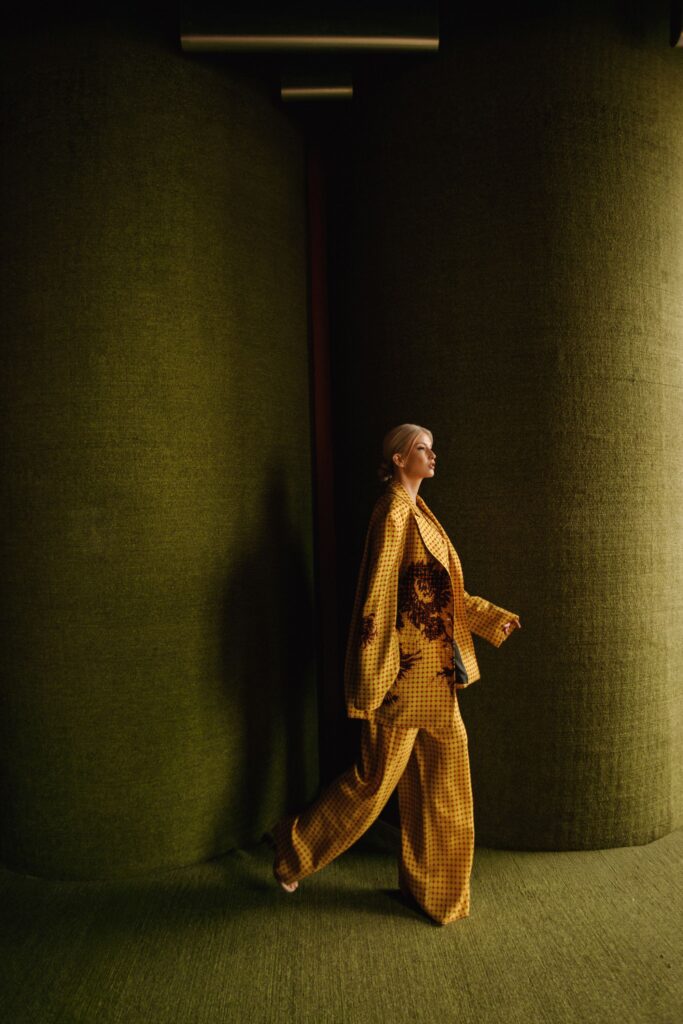
Heels : Gucci
Koliko Vam je važno nasleđe?
Nasleđe je temelj svega za mene. Moje otpornosti, mog osećaja za lepotu i načina na koji se krećem kroz svet, uključujući i to kako se predstavljam spolja. Deo moje priče koji većina ljudi ne zna, a koji objašnjava moju snagu, jeste to da nisam odrasla verujući da je moj glas važan. Odrasla sam noseći priču svoje bake kao drugi otkucaj srca. Ona je preživela tamu o kakvoj većina ljudi čita samo u udžbenicima istorije, ali za nju to nije bila istorija. To je bilo sećanje. Vazduh koji je udisala. I to me je oblikovalo pre nego što sam to uopšte razumela. Većina ljudi danas vidi samouverenu ženu kakva jesam, onu koja govori glasno i ne skriva svoj identitet. Ali ono što ne vide jeste devojčica koja je rano naučila da tišina može biti smrtonosna. Moja baka me nije učila otpornosti kroz lekcije. Ona ju je živela. Ušila ju je u način na koji je govorila, u to kako je i dalje verovala u lepotu čak i nakon što je videla najgore strane čovečanstva. Naučila me je da preživljavanje nije samo ostati živ, već odlučiti da se živi sa svrhom.
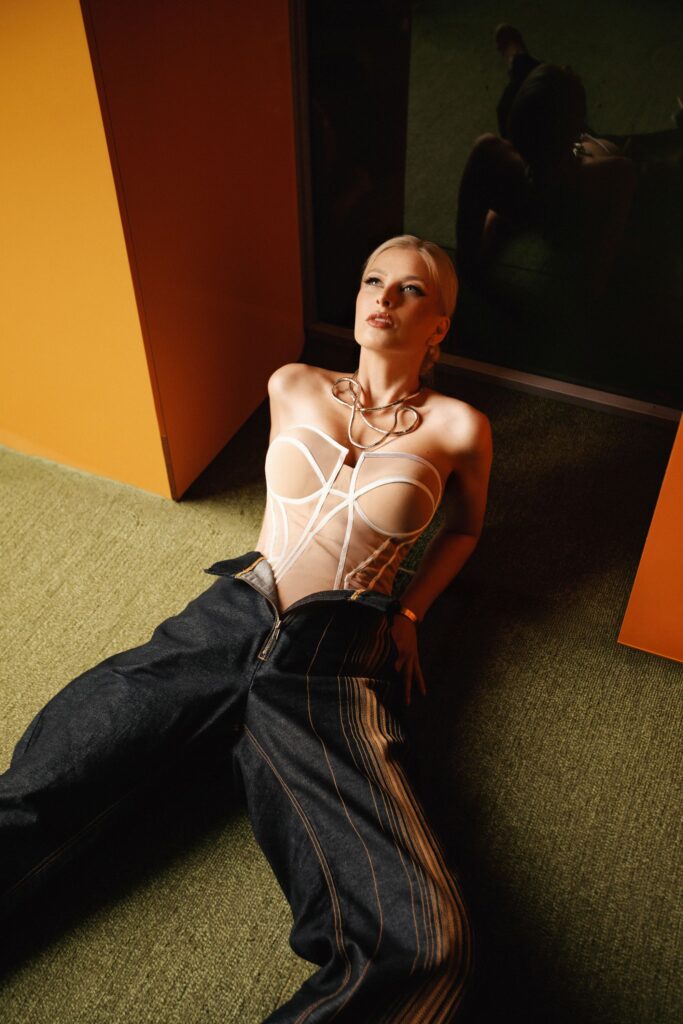
Pants : Freier
Bracelets : Cartier
Necklace : Saks Fifth Avenue
Kako se moda uklapa u Vaš život? Šta volite kod mode?
Moda je oduvek bila deo mog života, ali se njena uloga menjala kako sam se i ja menjala. Ono što je počelo kao izraz i kreativnost, postepeno je postalo identitet, a zatim i odgovornost. Shvatila sam modu kao jezik koji govori pre reči i često kaže ono što reči ne mogu. Postojao je period u mom životu kada je oblačenje bilo isključivo pitanje estetike. Ali vremenom, naročito nakon niza ličnih lomova koji su me primorali da preispitam ko sam i šta mi je važno, moda je postala nešto mnogo dublje. Shvatila sam da ono što nosimo može nositi sećanje, otpornost i nameru. Može biti oblik prisutnosti. Proživela sam unutrašnje „vatrene“ trenutke u kojima je sve površno nestalo. Nakon toga, moda je prestala da bude performans i postala istina. Postala je način da budem vidljiva u onome što jesam, bez izvinjenja. Odeća je postala moj način da kažem: ovde sam, ukorenjena sam i neću se umanjivati. Moda mi je takođe dala platformu. A kada jednom shvatite moć vidljivosti, ne možete je „od-znati“. Stil može biti lep, ali može biti i svrsishodan. Može utešiti, suočiti i povezati. Najviše volim modu kada radi sve troje – kada priča ljudsku, slojevitu i stvarnu priču. Danas se moda u mom životu pojavljuje i kao oklop i kao poziv. Oklop, jer mi omogućava da se kroz svet krećem sa snagom. Poziv, jer otvara razgovore o identitetu, otpornosti i prisutnosti bez potrebe da vičem. U svom najboljem izdanju, moda ne odvlači pažnju od toga ko ste. Ona vas razotkriva.
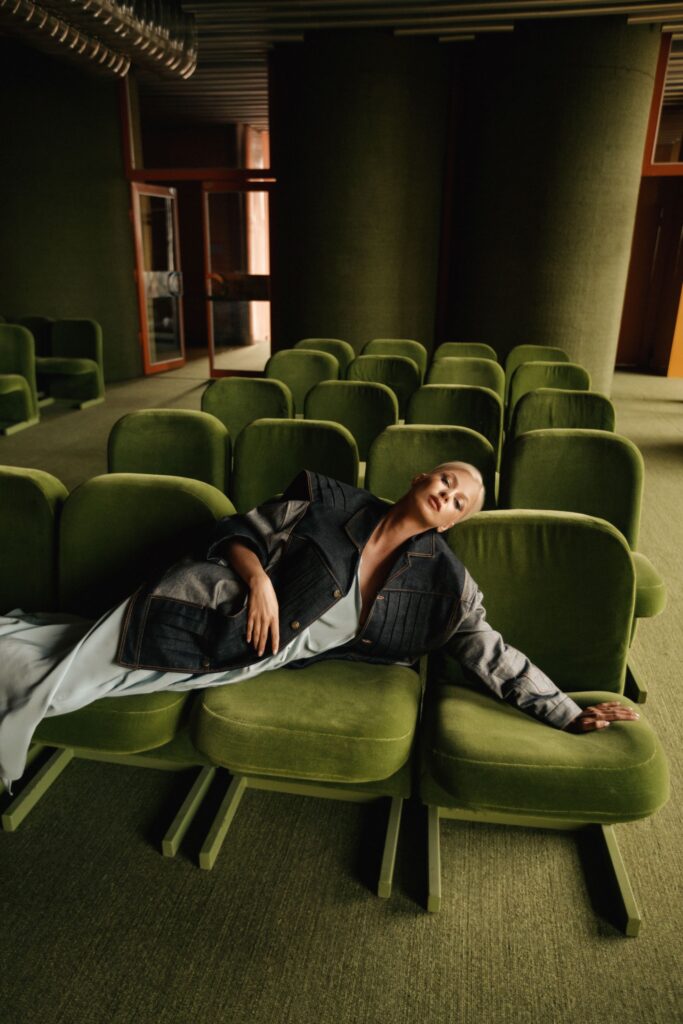
Dress : Lucia Kurthy
Kada ste odlučili da se aktivno uključite u humanitarni rad? Kako mislite da svako od nas može da izgradi platformu za delovanje u skladu s onim što mu je blisko srcu?
Moje uključivanje u humanitarni rad, posebno u oblasti traume i posttraumatskih iskustava, postalo je neizbežno kada sam iz prve ruke videla kako izgledaju hitnost, ljudskost i stvaran uticaj. Povezivanje mode i posttraumatske nege u početku zvuči nemoguće. Jedan svet opsednut vidljivim, drugi definisan ranama koje niko ne vidi. Biti na prvoj liniji nije glamurozno. Nije kurirano. Nema energiju prvih redova na nedeljama mode. To je sirova ljudskost.
Možeš li nam reći nešto više o ovom snimanju?
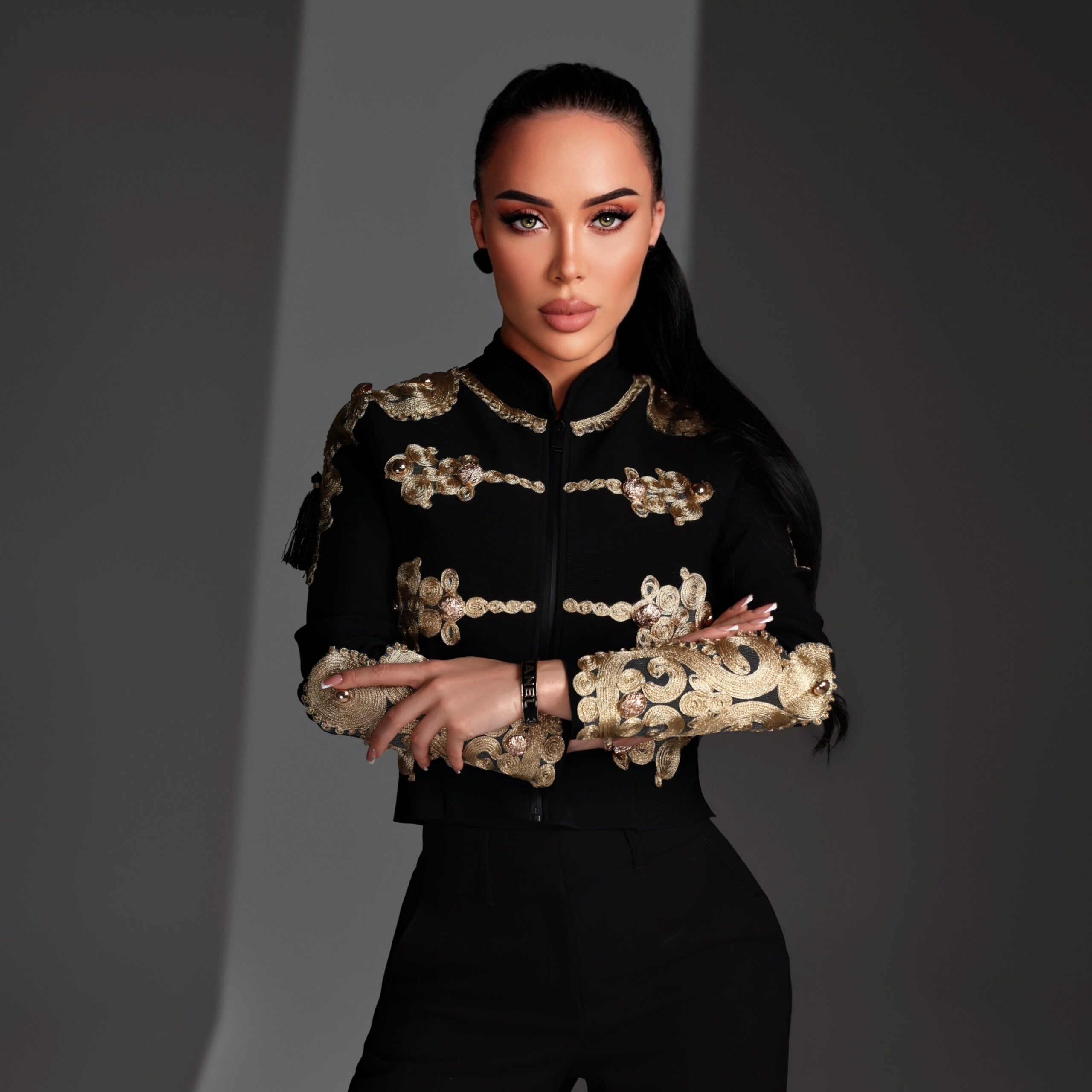
Ovo snimanje ima vrlo nameran naslov. Ono ne odražava samo estetski trenutak, već i lični i emotivni – ko sam nakon svega što je izgorelo i šta je ostalo. Vizuelno, snimanje istražuje snagu nakon loma, eleganciju nakon udara i ženstvenost koja nije dekorativna, već ukorenjena. Predstavlja ženu kakva sam postala kada je sve površno nestalo, nakon što su identitet, sigurnost i izvesnost bili dovedeni u pitanje, i nakon što sam shvatila da vidljivost nosi odgovornost. Da, verujem da modna industrija danas ima moralnu odgovornost, naročito kada je reč o kulturnoj istini, konfliktima i ljudskosti. Kada radite u industriji izgrađenoj na vidljivosti, uticaju i pripovedanju, pretvarati se da svet ne pati deluje gotovo neodgovorno. Moda je oduvek oblikovala kulturu. Ali danas kultura postavlja modi mnogo dublje pitanje. Ne očekujem da svaki dizajner ili brend postane politički, ali verujem da svi imamo odgovornost da poštujemo istinu, ljudskost i proživljeno iskustvo. Moda je globalna i ta moć zahteva jasnu nameru.
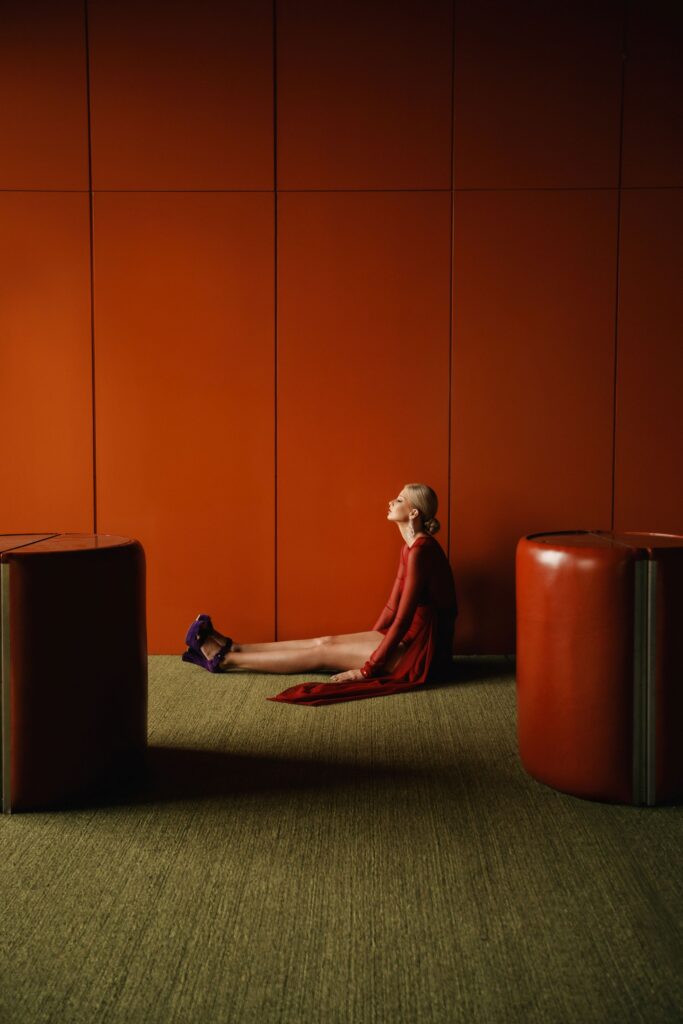
Earrings : Swarovski
Heels : Miu Miu
Kako balansirate privatni i profesionalni život? Koji su izazovi žena u savremenom dobu?
U jednom trenutku postalo mi je jasno da moda nije samo jezik, već i pozornica. I ako će svet da gleda, želim da vidi ženu koja odbija da skriva svoj identitet, svoje vrednosti i svoju ženstvenost. To saznanje promenilo je način na koji se krećem i kroz privatni i kroz profesionalni život. Balans za mene nikada nije značio pokušaj da budem sve ili da radim sve. Znači znati ko sam i ostati verna tome, bez obzira na trendove ili očekivanja. Ne verujem da žene moraju da preuzmu muške uloge ili energije da bi bile poštovane ili saslušane. Snaga postoji u jasno izraženoj ženstvenosti – u gracioznosti, doslednosti, intuiciji i emocionalnoj inteligenciji. Te osobine nisu zastarele; one su temeljne. Jedan od najvećih izazova s kojima se žene danas suočavaju jeste pritisak da se redefinišu na načine koji su udaljeni od njihove prirode. Često nam se govori da moć mora izgledati na određeni način, zvučati na određeni način ili se kretati na određeni način. Ja to odbijam. Verujem da žene mogu da se pojave, da govore i da se zalažu za važne ciljeve, a da pritom ostanu potpuno žene – bez izvinjenja i bez imitacije. Dolazim iz loze žena koje su nosile porodice, vrednosti i sećanja kroz nesigurna vremena, a da nisu izgubile svoju mekoću ili dostojanstvo. One nisu mešale ženstvenost sa slabošću, niti su snagu merile glasnoćom. To nasleđe me vodi i danas, privatno i javno. Balans između privatnog i profesionalnog svodi se na usklađenost. Kada vaš rad odražava vaše vrednosti, a vaš izgled vašu istinu, ima manje unutrašnjeg konflikta. Moda tada postaje deo te harmonije – ne kostim, već nastavak onoga što jeste. Omogućava mi da budem vidljiva bez agresije, izražajna bez performativnosti. Izazov za žene danas nije da se takmiče s muškarcima ili da ih zamene. Izazov je ostati ukorenjena u sebi dok svet vuče na sve strane. Nositi odgovornost bez gubitka mekoće. Voditi bez napuštanja ženstvenosti. Biti prisutna, principijelna i celovita. A kada se moda koristi sa namerom, ona omogućava da se sve to vidi – tiho, jasno i bez kompromisa.
English here:
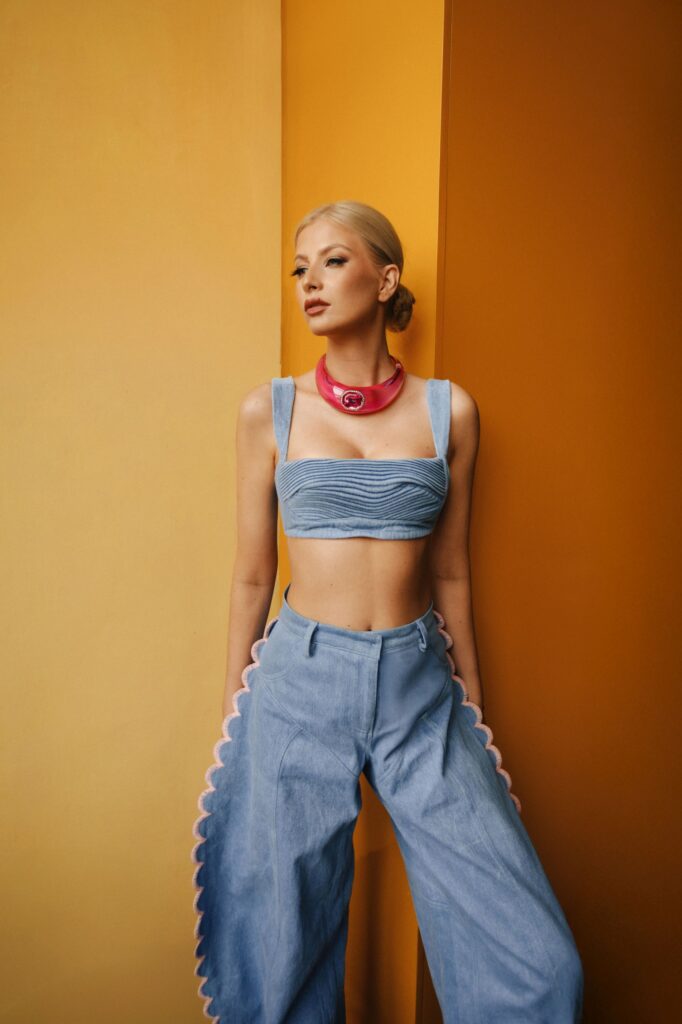
Jeans : Petra Kovacs
Necklace : Swarovski
Miriam Mattova is a woman whose story weaves together personal courage, family heritage, and a deep commitment to humanitarian work with the world of fashion. Her lived experience has transformed her visibility into a tool for advocacy and change.
In this interview, Miriam speaks about how fashion can become a powerful voice for truth and humanity.
How important is it for each and every one of us to have integrity and to follow our own truths? What would be your guide to fulfilling this?
Integrity, for me, is not theoretical. It’s lived. In fashion, in visibility, and in modern life, integrity is what remains when comfort, trends, and approval fall away. Following your truth often comes from being tested by it. The fire in my life wasn’t one moment, it was a collision of them. Living your truth is a challenge becuae it burns off ego, fear and performance. It forced me to stand face-to-face with my identity, my privilege, my responsibility. That was the moment I understood who I was: a woman who can sit in both worlds. A woman who will not apologize for her truth. A woman who refuses to be decor in a world on fire. The fire in my life didn’t destroy me, it revealed me. It burned away the version of me who wanted to be liked, and it gave birth to the woman who wants to be useful. The woman who knows her voice has weight. The woman who knows her visibility has meaning.
How important is heritage to you?
Heritage is the foundation of everything for me. My resilience, my sense of beauty, and the way I move through the world, including how I present myself outwardly. The part of my story most people don’t know, the part that explains my resilience, is that I didn’t grow up thinking my voice mattered. I grew up carrying my grandmother’s story like a second heartbeat. She survived the kind of darkness most people only read about in history books, but for her, it was not history. It was memory. It was the air she breathed. And that shaped me before I even understood it. Most people see the confident woman I am today, the one who speaks up, the one who won’t hide her identity. But what they don’t see is the little girl who learned early that silence can be deadly. My grandmother never taught resilience as a lesson. She lived it. She stitched it into the way she spoke, the way she still believed in beauty even after witnessing the worst of humanity. She taught me that survival isn’t just staying alive, it’s choosing to live with purpose.
Your advocacy for PTSD care in soldiers is powerful and often uncomfortable for people to confront. How did this mission become part of your life?
This mission became part of my life the moment I understood that trauma doesn’t just live in the people who experience it, it lives in the people who love them, remember them, and carry their stories forward. For me, it started with my grandmother. She survived a kind of darkness the world swore it would never allow again. Then October 7th happened, and something in me snapped open. I couldn’t pretend the world was okay. I couldn’t stay in my safe bubble while soldiers, families, and children were living through trauma that would shape them forever. When I first connected with Israel Friends, everything clicked. Here was an organization that didn’t just talk about trauma care, they revolutionized it. Their work cuts through bureaucracy, getting soldiers, survivors, reservists, and first responders access to psychiatric evaluations and therapy in three days instead of 200. That alone changed me. Because when you’re dealing with PTSD, those 197 days in between are where the real danger lives. It’s impossible to witness that and go back to life as if nothing happened. People sometimes ask why I’m so vocal, why I bring this into fashion, into interviews, into my public presence. The answer is simple: because they can’t. The people carrying these wounds often don’t have the platform, the reach, or the emotional margin to advocate for themselves. I do. And with visibility comes responsibility. So yes, PTSD is uncomfortable for people to confront. Good. It should be. Healing doesn’t come from pretending everything is fine, it comes from acknowledging pain with honesty and urgency. And as long as there are heroes who return from battle with wounds the world can’t see, I will keep using my voice, my influence, my style, my story, to make sure they’re never forgotten, never ignored, and never left to heal alone.
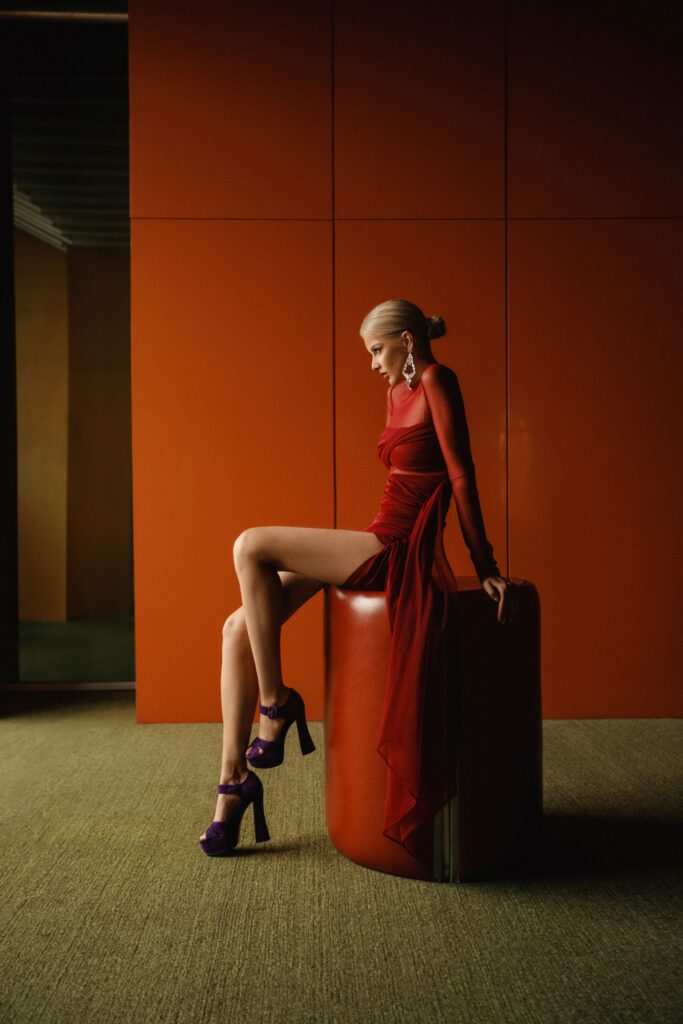
Earrings : Swarovski
Heels : Miu Miu
How does fashion fit into your life? What about fashion do you like?
Fashion has always been part of my life, but its role has evolved as I’ve evolved. What began as expression and creativity slowly became identity, and eventually responsibility. I’ve come to understand fashion as a language that speaks before words do, and often says what words can’t.There was a point in my life when getting dressed was about aesthetics alone. But over time, especially after a series of personal ruptures that forced me to reassess who I was and what mattered, fashion became something deeper. I realized that what we wear can hold memory, resilience, and intention. It can be a form of presence.I experienced a kind of internal “fire” moments where everything superficial fell away. After that, fashion stopped being about performance and started being about truth. It became a way to stand visibly in who I am, without apology. Clothing became my way of saying: I’m here, I’m grounded, and I won’t shrink.Fashion also gave me a platform. And once you understand the power of visibility, you can’t unknow it. Style can be beautiful, but it can also be purposeful. It can comfort, confront, and connect. I love fashion most when it does all three when it tells a story that’s human, layered, and real.Today, fashion fits into my life as both armor and invitation. Armor, because it allows me to move through the world with strength. Invitation, because it opens conversations about identity, resilience, and presence without having to shout. At its best, fashion doesn’t distract from who you are. It reveals you.
When have you decided to become actively involved in charitable work? How do you feel each and every one of us can develop a platform to act, depending on the causes close to our hearts?
My involvement in charitable work particularly around trauma and postra traumatic events became unavoidable once I saw firsthand what urgency, humanity, and real impact look like. Bridging fashion and post traumatic care sounds impossible at first. One world obsessed with the visible, the other defined by wounds no one can see. Being at the forefronts isn’t glamorous. It isn’t curated. It isn’t front-row fashion week energy. It is raw humanity.
Can you tell us a bit more about this shoot?
This shoot is very intentionally titled. It reflects not just an aesthetic moment, but a personal and emotional one who I am after everything that has burned away, and what remains. Visually, the shoot explores strength after rupture, elegance after impact, and femininity that isn’t decorative, but grounded. It represents the woman I became once everything superficial fell away, after identity, safety, and certainty were tested, and after I understood that visibility carries responsibility. Yes, I do believe the fashion world has a moral responsibility today, especially when it comes to cultural truth, conflict, and humanity. When you work in an industry built on visibility, influence, and storytelling, pretending that the world isn’t hurting feels almost irresponsible. Fashion has always shaped culture. But today, culture is asking fashion a much deeper question. I don’t expect every designer or brand to become political, but I do believe we all have a responsibility to honor truth, humanity, and lived experience. Fashion is global, and that power needs intention behind it.
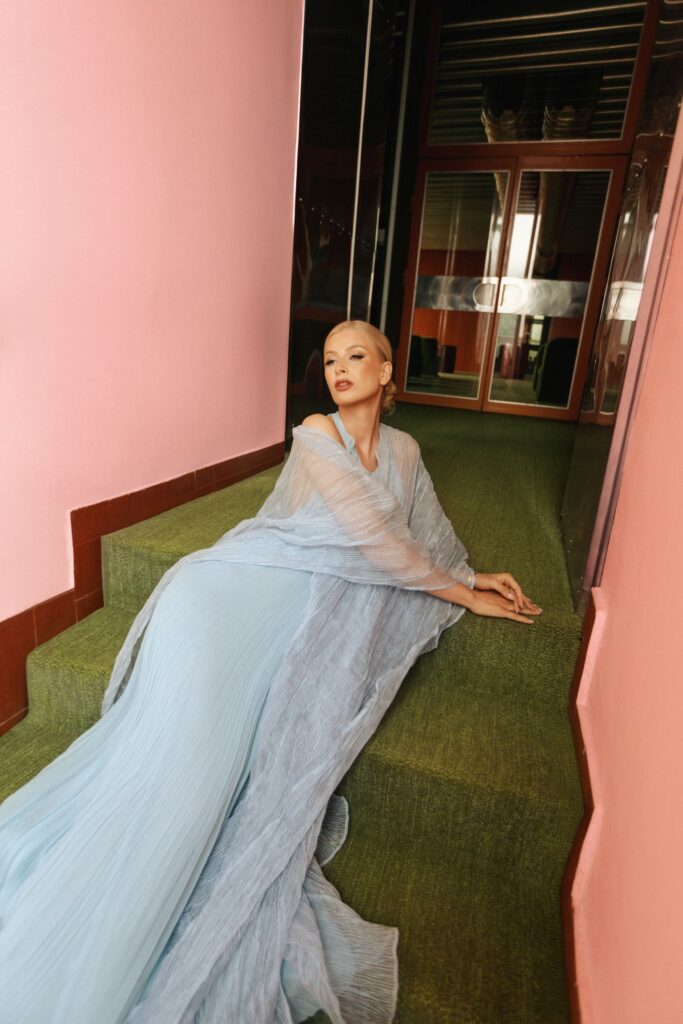
Cape : Silvia Zrebna
How do you balance personal and professional life? What would be the challenges of women living in modern times?
At some point, it became clear to me that fashion isn’t just a language, it’s a stage. And if the world is going to look, then I want them to see a woman who refuses to hide her identity, her values, or her femininity. That understanding changed how I move through both my personal and professional life. Balance, for me, has never meant trying to do everything or become everything. It means knowing who I am and staying loyal to that, regardless of trends or expectations. I don’t believe women need to take on masculine roles or energies to be respected or heard. There is strength in being distinctly feminine, in grace, consistency, intuition, and emotional intelligence. Those qualities are not outdated; they are foundational. One of the greatest challenges women face today is the pressure to redefine themselves in ways that feel disconnected from their nature. We’re often told that power must look a certain way, sound a certain way, or move a certain way. I reject that. I believe women can show up, speak up, and stand for meaningful causes while remaining fully women, without apology, and without imitation. I come from a lineage of women who carried families, values, and memory through times of uncertainty without losing their softness or their dignity. They didn’t confuse femininity with weakness, and they didn’t measure strength by volume. That inheritance guides how I live now, privately and publicly. Balancing personal and professional life comes down to alignment. When your work reflects your values and your appearance reflects your truth, there’s less inner conflict. Fashion becomes part of that harmony, not a costume, but a continuation of who you are. It allows me to be visible without being aggressive, expressive without being performative. The challenge for women today isn’t to compete with men or replace them. It’s to remain rooted in who we are while the world pulls in every direction. To carry responsibility without losing softness. To lead without abandoning femininity. To be present, principled, and whole. And when fashion is used with intention, it allows all of that to be seen, quietly, clearly, and without compromise.
Team Credits
Model: Miriam Mattova
Photographer : Anna Koniaeva
Make-up and Hair : Lukas Cakovsky
Stylist : Samuel Krajca